


The differences between dental filling and aesthetic dental restoration are not often clear, for most people. Although both the procedures are performed using filling materials, there is an enormous difference between them. Let’s look into what these are.
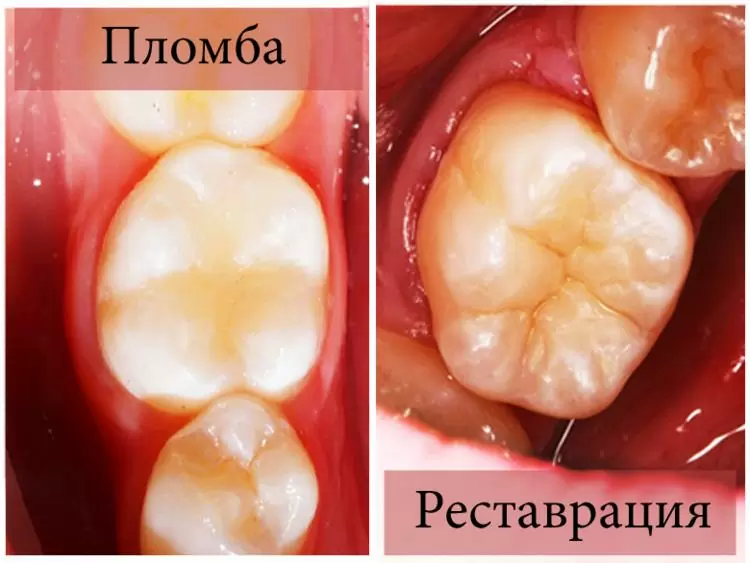
The differences between dental filling and dental restorations:
- Dental filling refers to the process of restoring integrity to the tooth.
- Dental restoration, however, also involves restoring lost functionality and the complete anatomy of the tooth and correcting its aesthetics.
- The sealant, as a general rule, consists of material, which is visually different in color, shade and texture from natural dental tissue.
- During restoration, the specialist tries to select materials in such a way as to restore the natural anatomy of the tooth. To put it simply, all the natural cusps, pits and sulcuses of the tooth are restored. The colour and transparency is carefully selected so as to ensure that the restored tooth looks as natural and attractive as possible.
Dental filling: stages and salient features
Dental filling starts from the preliminary examination during which a specialist identifies/reveals areas affected by caries. In case the caries cavity that needs to be filled is very deep, the patient might not need root canal treatment. In such cases, a few visits to the dentist’s office are required.
Immediately before starting the filling, the specialist administers an anesthetic (if necessary). Then, using a dental drill, the caries is removed from the surface of the dental tissue.
Rotary instrument nozzles come in a variety of sizes. As a rule, the procedure usually begins with the use of high-speed diamond nozzles to remove caries from the enamel region. When a specialist succeeds in “reaching” all the way down to the dentin, he uses the nozzle at a lower speed, because the dentin is softer than the enamel.
When the cavity is cleared of carious lesions, the preparation for the installation of a filling material begins. Each filling material requires a specific method of pre-treatment of the tooth.
For example, if the dentist is increasing the filling, he will first treat the surface of the dental tissues with an acid-based gel.
In the process of building fillings, on the other hand, a specialised bonding material is used, which provides the most dense connection between the seal and the tooth.
Modern types of composite filling materials harden under the influence of specialized light from a photopolymer lamp. In such cases, the specialist applies the material layer by layer, making sure to treat each subsequent layer with the radiation. The process of filling ends with the processing and polishing of the teeth.
What are some possible reasons for replacing the filling?
- Erosion/falling out;
- Dysfunction;
- Need to restore the complete anatomy;
- Carious lesions;
- Leakage;
- Occurrence of cracks;
- Changes of colour and shade.
At the end of orthodontic treatment, it may be necessary to replace or correct the filling to maintain the integrity of the bite.
Teeth Restoration: Features of the procedure.
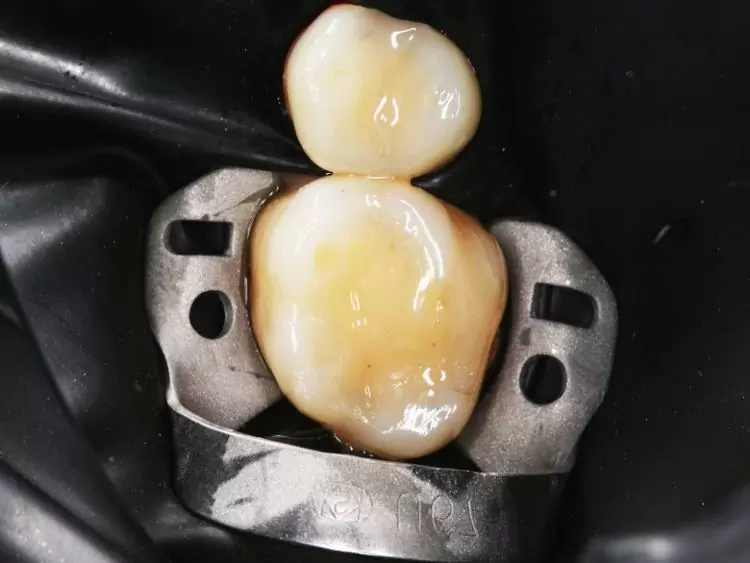
As was mentioned before, restoration is a complex procedure aimed at restoring the aesthetics and functionality of teeth, during which the concerned specialist applies filling materials of the requisite shades in layers, to restore the natural colour of the dental enamel. Enormous attention and care is placed not only on the aesthetic component but also to ensuring the accurate anatomical shape of the crown. The procedure is completed by grinding and polishing the teeth through the use of specialised rubber bands, disks, brushes and pastes (of varying levels of abrasiveness).
Thanks to these procedures, the enamel of the tooth acquires the smoothness and brilliance of a healthy and normal tooth.
Dental restoration is often recommended in the same cases where filling is necessary - But, in these cases, the aesthetic requirements are often higher, in order to restore the complete anatomy and proper function of the tooth.
Teeth restoration: Pros and Cons
While going over the advantages of disadvantages of restoration, we should note that the biggest advantages are aesthetics and being able to avoid prosthetics. Another undoubted advantage of restoration is that it allows us to get an optimal result in just one visit to the dental clinic. In this case, it has to be noted that the seal is also installed in one visit, but it does not differ in terms of the aesthetic outcome.
As for the disadvantages, the higher cost of restoration, in comparison to fillings, is probably one of the most noteworthy.
Nevertheless, it also has to be considered that the price is significantly lower than for the installation of veneers or lumineers. It should also be borne in mind that over time the composite filling material loses its shine and needs annual polishing. The recommended lifetime of the restoration is 5 years.
In conclusion, it should be noted that with direct restoration, there is a danger of the work performed not being sufficiently accurate, especially in places of the oral cavity that are hard to reach. This may lead to dental diseases. Therefore, we strongly recommend using restoration services exclusively from trusted specialists, whose professionalism has been repeatedly proven in practice.