


Gingivitis is a disease of the mucous membrane of the gums. Clinical signs - Inflammation and bleeding, swelling and changes in the contour of the gums. The most common cause of gingivitis is poor oral hygiene.
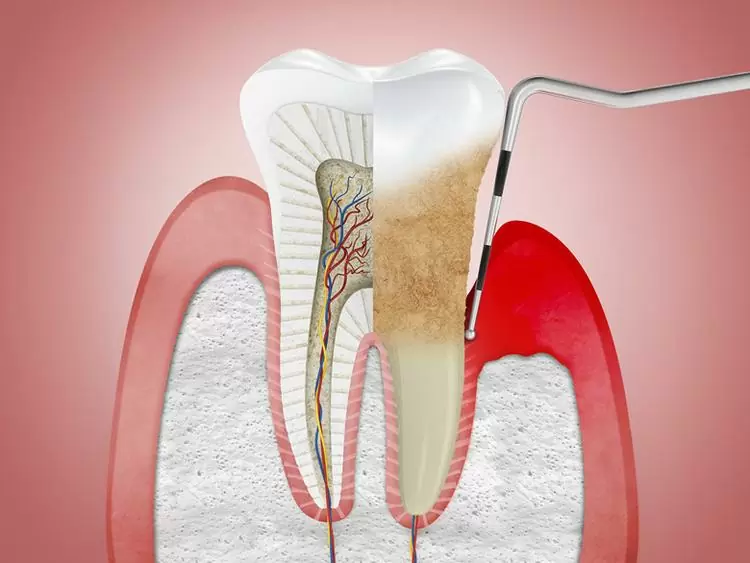
The jaw bones surrounding the roots of the teeth are located beneath the gums and ensure their stability. There are two types of gums - adjacent and marginal. The adjacent gum is attached to the bone and the marginal gum is located behind the tooth, rising over the attachment point by about one millimeter. If there is plaque accumulation in this small gap between the gum and the tooth, the marginal gum becomes inflamed. This condition is called gingivitis.
The first symptoms of the disease include inflammation and bleeding of the gums during brushing or flossing. In the absence of prompt treatment, the gums continue to be inflamed and in response, the point of attachment between the tooth and the gums slowly begins to descend down to the root. This leads to a recession of the bone level.
When the detachment of the gums from the tooth is significant, it is called a pocket. Plaque that accumulates over time, in the pockets, turns into a hard stony substance, which in turn, causes severe irritation and causes further inflammation and loss of bone. When there is a decrease in the level of the bone, this condition is termed “periodontitis”. Without treatment for gingivitis, bone loss continues, which ultimately leads to tooth loss.
Important!
Gum inflammation is a fairly common ailment that occurs in ⅔ of people, regardless of gender. Treatment of gingivitis should begin immediately upon the diagnosis of the disease. If you find yourself suffering from one of the above mentioned symptoms, please seek specialist help immediately. Gingivitis is dangerous because it has an insidious nature and it does not cause any pain. The disease isn’t noticed until it transitions into periodontitis, which in turn, causes the destruction of the dental tissue, and in turn, tooth loss.
Symptoms and types of gingivitis
If the gums bleed, there is an unpleasant odour from the mouth. It becomes painful to eat or even brush your teeth - this may indicate the presence of periodontal disease. Many people faced with this problem think they can simply stay home and wait to recover. But unfortunately, they are sorely mistaken. While relief may be achieved through drugs obtained from a pharmacy (in actuality, quite unlikely) , the effect is only momentary. Any pastes, ointments or rinses only mask the problem but definitely do not eliminate it. And worst of all, the disease does not simply cure itself.
As mentioned previously, the main cause of the disease is supragingival (visible) and subgingival (most insidious) stones on the teeth. They can not be eliminated at home. This requires professional treatment from a periodontist and an oral hygienist, who work together to eliminate both the first and second types of tartar.
Depending on the stage of development, there are several types of gingivitis: hypertrophic and catarrhal. Hypertrophic gingivitis is the most common type of gingivitis. As a rule, this form of gingivitis develops as a result of disturbances in the endocrine system, as well as in the presence of injuries caused by incorrectly installed fillings or low-quality prosthetics. Hypertrophic gingivitis can manifest as either fibrous or edematous. Catarrhal gingivitis, often occurs concomitantly with acute respiratory diseases, with the development of stomatitis and also with poor-quality oral hygiene.

How is gingivitis treated?
Gingivitis treatment begins with the diagnosis of the disease. To this end, the specialist conducts instrumental and visual inspections. Subsequently, an optimal treatment plan is selected, taking into account the specific clinical picture of the development of the disease, as well as the individual characteristics of the patient.
In standard situations, the treatment of gingivitis consists of several stages:
- Professional oral hygiene
- Anti-bacterial and anti-inflammatory therapy
- Treatment of caries (if necessary)
In rare cases, surgery might be indicated (subject to the presence of hypertrophic gingivitis) and rehabilitation therapy might be necessary.
Prevention of gingivitis
Any dental disease is easier to prevent than to treat. We strongly recommend that you adhere to the following standards of oral hygiene, in addition to monitoring your diet:
- Clean your teeth and gums twice a day - in the morning and in the evening. It is recommended that you use a high-quality toothpaste and a soft toothbrush and dental floss.
- Make sure that your diet contains requisite amounts of vitamin C (Sweet peppers, sauerkraut, kale, broccoli, strawberries, kiwi and all types of citrus fruits are good sources of vitamin C)
- It is vital to keep a check on your intake of simple carbohydrates and restrict the amount of pastries, chocolates and carbonated drinks you consume.
- Get yourself examined by a dentist at least twice a year and have your oral cavity professional cleaned.
- Get your teeth professionally polished with special pastes that prevent the deposition of tartar
Treatment of gingivitis in adults and children does not cause difficulties for specialists, but it is essential to monitor the health of your oral cavity periodically in order to know about the presence of disease. Chronic forms of the disease require regular therapy, as well as expenditure of time and resources.
Gingivitis: symptoms and treatment at the White and White Dental Studio clinic
Our specialists provide treatment of exceptionally high-quality when it comes to diseases of the gums and oral cavity:
- We select drugs based on the sensitivity of the identified pathogen (usually,bacteria).
- We pay close attention to make sure that disease are accurately diagnosed
- We adjust the skills of home oral care based on the position of teeth and presence of crowns, bridges etc.
- We prevent the recurrence of gum disease i.e gingivitis
We hope that this article has informed you about how to treat gingivitis correctly and taking the right precautions at home. It is vital that you entrust your health only to specialists. For us, there is nothing more important than the dental health of each patient of our clinic and these are not just empty words.